
The events of the last few months have demonstrated that the Obama administration was far more competent and deliberate than the Trump administration in handling the Iran nuclear controversy. While the Obama administration addressed the issue diplomatically, Trump consistently resorts to boastful rhetoric lacking substance.
What we have witnessed between Obama’s institutionalist approach to ending Iran’s nuclear ambition through the JCPOA deal and Trump’s disruptor approach to dealing with Iran’s nuclear program confirms that competence is not blustering, bluffing, or empty threats. It is an understanding of diplomacy and the ability to act efficiently and successfully. It is the combination of knowledge, practical skills, and experience necessary to perform tasks effectively.
Unlike the Obama administration, the Trump administration is characterized by a cabinet structure dominated by Donald Trump, who unilaterally determines strategic direction. In most instances, decisions or indecision occur without a systematic process.
During his first term, Trump relied on advisers who provided consistent guidance, even when his decisions were unpredictable or conflicted with established norms. In his second term, the administration operated with less input from advisers. Trump either selected ineffective advisers or ignored sound counsel, and at times both occurred. He also appointed cabinet members who lacked ethical standards and were willing to pursue partisan policies or target political opponents. Contradictions frequently arise between Trump and his cabinet members on policy issues, especially regarding the Iranian nuclear issue. Trump often makes bellicose statements, while the Secretary of State presents a more measured stance.

.President Donald Trump
The JCPOA Approach (Multilateral Diplomacy)
The contrast between the Joint Comprehensive Plan of Action (JCPOA) negotiated under President Barack Obama and the “maximum pressure” campaign of President Donald Trump remains central to current foreign policy debates, highlighting two distinct diplomatic approaches. The Obama administration’s multilateral negotiations with Iran, the US, the UK, France, Germany, Russia, and China established a legally binding framework, monitored by the International Atomic Energy Agency (IAEA). In contrast, Trump’s unilateral withdrawal and reimposition of economic sanctions severely damaged Iran’s economy but prompted Iran to breach enrichment limits, resulting in a more advanced nuclear program than before.
Under the JCPOA signed in 2015, Iran formally affirmed that “under no circumstances will Iran ever seek, develop or acquire any nuclear weapons.” The agreement allowed Iran to regain access to approximately $50 billion to $100 billion of its own funds that had been frozen worldwide. Iran also received a $1.7 billion settlement, including accrued interest, for a decades-old legal dispute before the Hague-Paris Claims Tribunal regarding an unfulfilled 1970s military equipment contract. Although there was debate about how Iran used these funds, the money belonged to Iran and had been frozen by international banking sanctions, not provided as a payout.
According to the International Atomic Energy Agency (IAEA) and U.S. intelligence agencies, Iran complied with its nuclear commitments under the JCPOA until, and for some time after, the Trump administration withdrew from the accord in May 2018. Under the JCPOA, the United States engaged with Iran using Iranian resources, which reduced American expenditures and prevented armed casualties. As part of the 2015 agreement, Iran shipped 98 percent of its enriched nuclear material to Russia. In exchange, Iran received approximately 140 metric tons of natural, unenriched uranium, permitted only for peaceful civilian energy or research purposes under strict international monitoring.
The Birther Movement and Political Origins
Donald Trump consistently opposes initiatives linked to Barack Obama, regardless of their outcomes. His political career began with public criticism of Obama. Starting around 2011, Trump became one of the most prominent voices promoting the “birther” conspiracy theory, which falsely claimed that Barack Obama was not born in the United States. This media campaign elevated Trump’s profile among conservative voters, providing him with a distinct political platform and base of support that laid the groundwork for his successful 2016 presidential run.
Policy Reversals and “Erasure” Strategy
After taking office, a primary focus of the Trump administration was the systematic rollback or replacement of key Obama-era policies. This approach has continued to shape policy decisions into his second term. Key areas include:
- Healthcare: A multi-year effort to repeal and replace the Affordable Care Act (ACA), which ultimately shifted toward chip-away legislative changes and executive orders.
- Climate and Environment: Exiting the Paris Climate Accord, rolling back the Clean Power Plan, and reversing vehicle emissions standards established under Obama.
- Foreign Policy: Formally withdrawing from the Joint Comprehensive Plan of Action (JCPOA), commonly known as the Iran Nuclear Deal, and reversing the diplomatic opening with Cuba.
- Trade: Replacing the North American Free Trade Agreement (NAFTA) with the USMCA and abandoning the Trans-Pacific Partnership (TPP) framework.
With little understanding of the JCPOA’s elements, Donald Trump criticized the Iran nuclear deal for granting Iran massive sanctions relief. He argued that the resulting cash flow and unfrozen assets were being used by Tehran to fund its military buildup and support regional proxy groups in Syria, Yemen, Iraq, and Lebanon. Trump believed the Obama administration had negotiated from a position of weakness. He disparaged President Obama, using expletives to describe him.
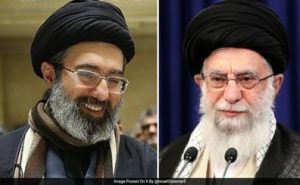
Father and son: old and new Iran leader
President Donald Trump officially withdrew from the nuclear agreement—one of his first actions after he assumed the second term—which he criticized as a “horrible, one-sided deal” that failed to protect American security interests. An African adage postulates that if something works just fine, let it be — no need to tinker with what already runs smoothly.
President Trump’s decision to engage in conflict with Iran, which was arguably unnecessary, has resulted in Iran becoming more economically formidable than it was prior to the conflict. The United States experienced significant losses, including war, casualties, and severe economic decline before Trump acknowledged his mistakes and began seeking an off-ramp to save face. He began seeking a deal with Iran so bad.
Alas, under the current Trump Memorandum of Understanding (MOU) signed with Iran, Trump has done worse than he criticized Obama for doing. His failure to secure a better deal with Iran stemmed from his hubris in believing he was smarter than everyone else. He has not demonstrated the level of dealmaking expertise that he claims. He sends his men out to negotiate with an adversary, but no sooner are they out on their pursuit than he berates any potential outcome of the proposed meeting. He sometimes claims to have reached agreements that never took place, to the point that he becomes a laughingstock to the world. Trump often counters his own message, for which he sends out emissaries, by blustering against them on social media – a rare means of communication for past US presidents.
Proposing joint negotiations with the opposition while publicly criticizing counterparts and issuing existential threats reflects limited diplomatic maturity. That was Trump’s art of the deal.
Here are the elements under Trump’s Memorandum of Understanding (MOU):
(1) Immediately upon signing, the U.S. Treasury Department will issue waivers allowing Iran to export crude oil, petroleum products, and petrochemical derivatives, and will restore necessary associated banking and financial services.
(2) The U.S. commits to a scheduled termination of all primary and secondary unilateral sanctions, as well as working to lift UN Security Council and IAEA Board of Governors resolutions as part of the final agreement.
(3) Restricted or frozen Iranian funds and assets will be systematically unfrozen and made fully available to the Central Bank of Iran as negotiations progress.
(4) The U.S. and its regional partners commit to developing a comprehensive rehabilitation plan for Iran’s economic development, securing financing of at least $300 billion.
All other discussions regarding the Nuclear Program Framework have been postponed for 60 days.
It is important to recognize the collateral impact of the war in Iran: over $100 billion in expenditures, 13 American fatalities, and 365 wounded service members. Middle Eastern partners have also suffered attacks and casualties. Additionally, American households have faced increased fuel costs. The MOU also includes the renegotiation of certain JCPOA provisions. I do not consider this to be the art of the deal.
More significantly, Trump’s actions led Iran to discover a new source of leverage — the Strait of Hormuz — thereby strengthening its bargaining power over the global economy. Who needs nuclear weapons if the Strait of Hormuz can suffice?
This new shift in influence pressured the Trump administration to meet several of Iran’s demands and resulted in substantial economic relief for Iran. While the current Memorandum of Understanding provides a framework for a lasting nuclear agreement, I anticipate it may not fully incorporate all elements of the Joint Comprehensive Plan of Action (JCPOA) established under the Obama administration.
By Nicholas A. Owoyemi, CFA
Moderate Voices of America (MVA)