
Explainer · Moderate Voices of America (MVA)
By Nicholas A. Owoyemi
On Monday, the Commerce Department issued a new rule aimed at a gap in America’s AI chip controls: Chinese companies that cannot buy Nvidia’s most powerful chips have been renting them instead from data centers in other countries.
The rule, announced the day before Nvidia reports quarterly earnings, requires a license for that remote access. It lands four days after Jensen Huang resigned as Nvidia’s chief executive, and two weeks before Congress has asked to question him about how the chips got out in the first place.
The question the rule must answer is simple: if the chips were never supposed to reach China, how did they get there—and will a new license requirement stop it?
What we know about Megaspeed
The company at the center of the story is Megaspeed, a Singapore-based data center firm and Nvidia customer. U.S. authorities have considered adding Megaspeed to a restricted entity list over allegations that it acquired thousands of Nvidia graphics processors and routed the computing power to Chinese organizations. Megaspeed is under investigation in the United States and Singapore. It denies smuggling chips.
The personal thread is what turned a trade story into a leadership crisis. Alice Huang, a former Megaspeed executive, is described in a classified U.S. memo as a recruit of China’s Ministry of State Security, according to the New York Times and the Financial Times. She has not been charged with any crime, and China denies the allegation. Huang’s resignation on November 12 followed reports of two romantic affairs, one of them with Alice Huang. Nvidia’s board investigation persists.
None of that, on its own, proves chips were diverted. That’s why Congress and the Commerce Department are now asking for proof in both directions: proof of what was shipped, and proof of what the controls actually caught.
How the controls were supposed to work
Since 2022, Chinese companies have largely been barred from buying Nvidia’s most advanced data center chips without a U.S. license. The restriction covered the sale. It did not cover the rental.
A data center in Singapore or Malaysia could legally buy the hardware, install it, and sell the computing power to a customer in China that never touched a single chip. The customer got the AI training capacity; the seller never exported a chip to China. That is the loophole the new rule is written to close — and it is the same route the Megaspeed allegations describe.
What Monday’s rule does
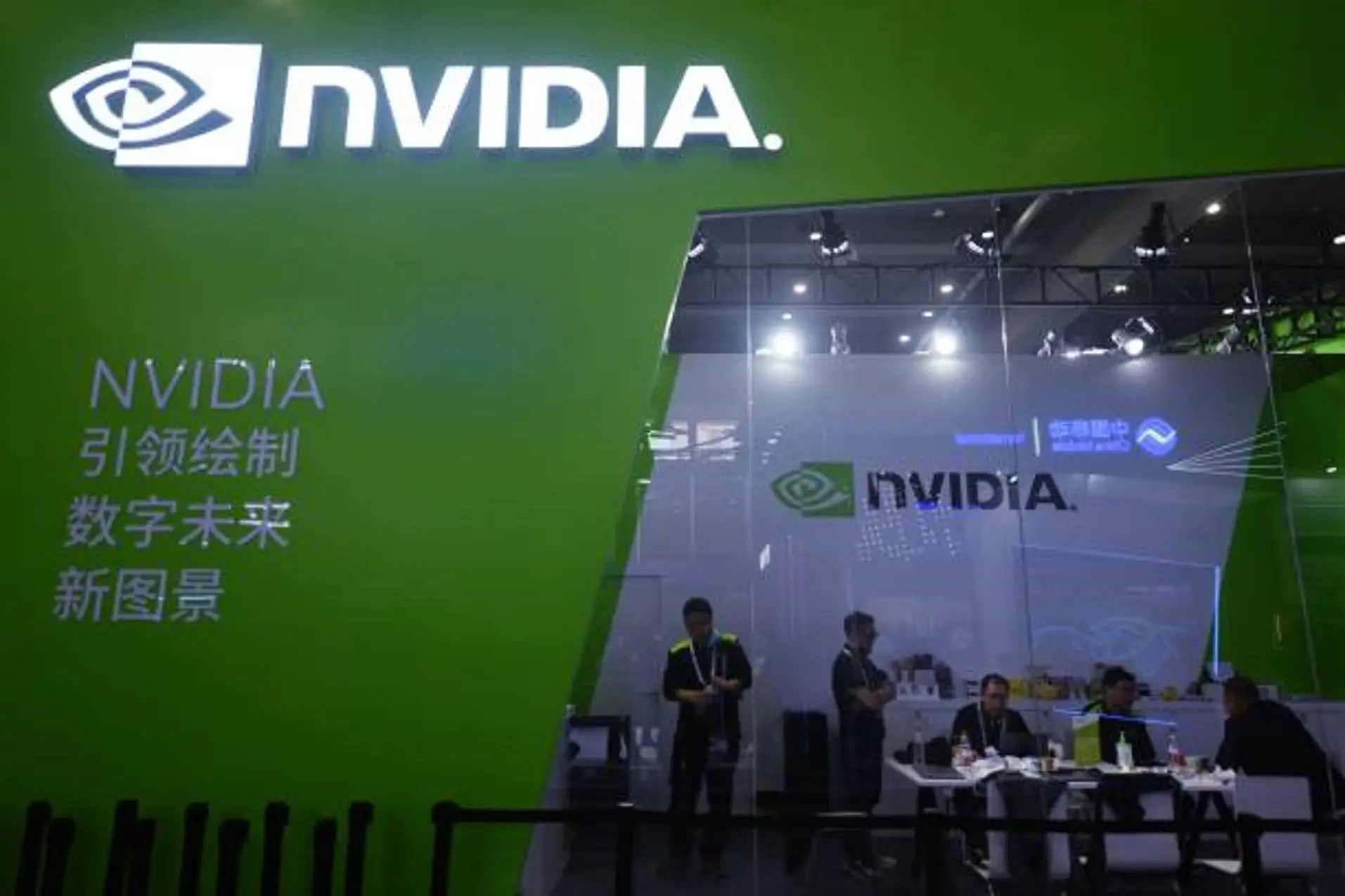
The interim final rule from the Commerce Department’s Bureau of Industry and Security (BIS), written at the direction of the Treasury Department and the National Security Council, does four things:
- Licenses for remote access. A license is now required to ship advanced AI chips to any data center, anywhere in the world, that gives companies headquartered in China, Macau, Russia, Iran, North Korea, or other embargoed destinations access to more than 12 million units of “aggregate TPP” — total processing performance, Washington’s yardstick for raw computing power. That threshold is roughly 750 of Nvidia’s H100 chips. Data centers already serving those customers have 90 days to obtain a license.
- Licenses for five diversion-risk countries. Advanced AI chips and servers shipped to Singapore, Malaysia, Indonesia, Thailand and Brazil — named as carrying a “higher-than-normal risk of diversion” — now need licenses.
- Ownership checks. Data centers have to check who ultimately owns and controls customers receiving large amounts of computing power. A customer that refuses to answer is treated as a red flag.
- An end to the tiered system. The rule formally rescinds the Biden government’s January 2025 AI Diffusion Rule, which sorted the world into three tiers for chip access. That rule was announced but never enforced.
The rule includes limits. It covers only large-scale access — the 12 million TPP threshold leaves ordinary cloud customers untouched. Compute used only for commercial recommender systems (the kind that rank products and posts) is carved out; anything that generates text, images, audio, video, or code is not. And the rule takes effect when it is published in the Federal Register, which has not happened yet. The public gets 60 days to comment.
The market noticed. By mid-afternoon Monday, the 19 largest U.S.-listed technology stocks had lost about $960 billion in combined market value, according to Benzinga’s calculations — the day’s sell-off ran well beyond Nvidia, which closed down 4.1%.
What Congress is asking
Three House committee chairmen — Brian Mast (Foreign Affairs), John Moolenaar (Select Committee on China) and Rick Crawford (Intelligence) — asked Huang to sit for a closed-door, transcribed interview on December 1, and Nvidia general counsel Tim Teter on December 2. The letter gave Huang until 8 p.m. ET on Friday, November 13, to confirm in writing, or the Foreign Affairs Committee would issue a subpoena.
The committees also asked Commerce Under Secretary Jeffrey Kessler, who runs BIS, to appear at a hearing on December 3 on chip smuggling, adversary military use of advanced AI chips, reported interference by private companies in export-control investigations, and Megaspeed.
In the Senate, Banking Committee Chairman Tim Scott asked Huang to testify on December 3 and Commerce Secretary Howard Lutnick — whose department houses BIS — on December 10. Lutnick’s spokesperson said he has agreed to appear voluntarily.
Two things concerning the timeline are worth stating plainly. First, Mast has said Huang agreed to brief lawmakers, with the timing still being negotiated — so an appearance before Thanksgiving remains possible. Second, as of the weekend, no public response from Huang to the House request had been reported, and no subpoena had been reported either. The dates are requests backed by subpoena threats, not confirmed appearances.
There is also a clock Congress cannot stop. Republicans lose control of the House committees in January, when the new Democratic majority takes over. A subpoena issued now would likely lapse and need to be reissued by the incoming majority — which is one reason the December dates matter, and one reason the incoming majority’s own interest in the file will matter in January.
The test both parties now face
Here the story stops being about one company. Both parties built the controls now being tested. The Biden government wrote the 2022 restrictions and the tiered Diffusion Rule. The Trump administration rescinded the tiered rule and wrote the remote-access rule. Both administrations agreed on the goal: keep America’s most powerful AI chips out of the hands of China’s military and its leading AI labs. The disagreement has been about method—and enforcement.
The administration’s case for the new rule is clear: it targets the actual workaround. For years, the restriction covered sales but ignored rentals. Closing the rental route and naming the five countries where diversion risk is highest aims the rule at the gap, not the whole market.
The skeptics’ case is also straightforward, and it comes from both directions. One version says the threshold can be gamed — capacity split across facilities, ownership hidden behind intermediaries — and that BIS, a small bureau, cannot police remote computing arrangements around the world. The rule counts capacity across linked data centers, which answers part of that, but the ownership checks depend on data centers asking questions their customers may not want to answer.
The other version says the controls push China to build its own chips faster, and that the cost lands on American companies and their shareholders first — a version of the argument that showed up in Monday’s market sell-off.
The rule’s text settles neither case. The test will be the evidence: whether the Megaspeed investigation produces charges or a listing, whether data centers actually seek the new licenses, and whether the December testimony produces a record of what was shipped and who knew.
Treasury Secretary Scott Bessent has added another pressure point, reportedly giving Nvidia’s board 10 days to answer whether it pushed illicit chip sales to boost revenue. He has also said publicly that Nvidia needs a “dramatic shake-up” and should hire an outside CEO. The board says it has not formally engaged any candidate.
What to watch
- Tuesday, November 17: Nvidia reports third-quarter results after the close, the first under interim chief executive Colette Kress. Watch for what she says about China revenue, export exposure and the CEO search — not just the headline numbers.
- Federal Register publication: the rule takes effect when published; the 90-day clock for existing data centers starts then.
- December 1 and 3: the House interview request for Huang, the Kessler hearing, and the Senate Banking testimony. Whether Huang appears voluntarily, and what the committees release afterward, will say more than the subpoena threats have.
- The Megaspeed investigation: whether U.S. authorities add the company to a restricted list, and what Singapore’s investigation finds.
The controls were written to keep the most powerful AI hardware out of an adversary’s hands. The Megaspeed allegations say the hardware may have gotten there anyway — not by sale, but by rental. Monday’s rule is the government’s answer to that specific route. Whether it works now depends on enforcement, and December is when the public starts to get the evidence.