
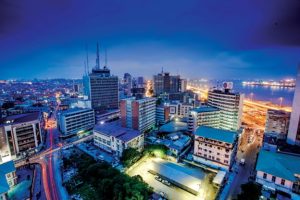
Nigeria is the home to almost one in six Africans. Nigeria’s economy is a mixed bag of expansion and recession. It is a diverse economy, and its emerging market has been experiencing growth in various sectors, including manufacturing, finance, services, communications, technology, and entertainment. It currently ranks as the 27th-largest economy worldwide based on nominal GDP and the 24th-largest based on purchasing power parity. According to recent statistics, Nigeria’s nominal GDP in 2022 is $477.38 billion, making it the largest economy in Africa.
Nigeria’s manufacturing sector is the largest in Africa, producing a significant proportion of goods and services for the region. However, Nigeria has faced economic recessions in recent years, and its GDP has struggled to keep pace with population growth, resulting in a decline in per capita income. Additionally, the country rated below the sub-Saharan African average on all significant indices of health and well-being, including the World Bank Human Capital Index.
Despite its economic growth, the country is plagued by a profound economic malaise – its incomes are stagnant, inflation is too high, infrastructure is inadequate, and poverty has widened. Nigeria ranks 167th out of 174 countries on the World Bank’s Human Capital Index, placing it among the eight economies with the lowest human capital in the world. Despite its development needs, the country spends only $220 per Nigerian per year, one of the lowest spending levels in the world at merely 12% of GDP. This low public spending has resulted in poor development outcomes for the country.
Nigeria is indeed facing a paradoxical situation where its economy is growing, but most citizens still struggle to access basic amenities. Unfortunately, the government has not prioritized investing in infrastructure, education, health services, and developing its human capital, which is crucial to improving the quality of life for Nigerians and driving the country’s economic growth. Of course, these investments must be balanced with a steady program to reduce inflation and attract massive foreign investments to thrive and reach the nation’s full potential.
Increase Revenue and Decrease Wasteful Spending
The efficient use of public funds is undoubtedly crucial for a nation’s development. The government has eliminated multiple exchange rates and petrol-fuel subsidies. While these actions may result in short-term economic challenges, they will lead to long-term benefits for the country. Additionally, ending untargeted and distortive subsidies and eliminating inefficiencies in the administration of public funds is crucial to freeing up resources for infrastructure development and social services.
The government must generate more revenue and provide incentives for foreign investments. The country’s youthful population and entrepreneurial spirit hold the key to a brighter future, but only if the government takes bold steps to tackle the challenges head-on.
Nigeria’s regional economies have distinct characteristics. The Southwest region boasts the fastest GDP growth in the country, while the Southeast region is resource-rich and among the wealthiest in the country. However, the northern states are mainly agricultural, having the lowest GDP per capita. While the federal government promotes economic growth and development, it is essential that these regional governments also diversify their economies in the most effective ways possible, reducing the over-reliance on oil revenues and creating sustainable economic growth and job opportunities for their citizens.
The ever-present Elephant in the room
The giant Elephant in the room is the pervasive and damaging effect of corruption in the country. Although it is not a popular topic among the ruling elite, without its inclusion in the mix and finding a solution, no nation can reach economic excellence even if it gets everything else right. Nigeria has been plagued by corruption for decades, beginning with the military rulers and continuing with politicians. Corruption in Nigeria has become a significant obstacle to economic development, good governance, effective law enforcement, business, public service, and the overall well-being of the population. It has markedly hindered the import of urgently needed foreign investments to the country.
Ensuring transparency in public procurement, law enforcement, and the judiciary is crucial. Despite the presence of financial watchdogs such as the ICPC and EFCC, corruption remains a significant challenge in Nigeria. It is a mistake to assume that the government alone can solve this problem. Fighting corruption and promoting transparency and accountability requires a collective effort from all stakeholders, including the government, civil society, and the general public. This collaborative effort can unleash Nigeria’s full potential and pave the way for a brighter future.
Please send us your comments below.
Nicholas A. Owoyemi, CFA
President & CEO (Author)
Moderate Voices of America
30 Wall Street, 8th Floor
New York, NY 10005
212 406-1958
info@moderatevoices.org
www.moderatevoices.org
Nicholas A. Owoyemi is a Principal Financial Executive with American Financiers Group, New York, USA.